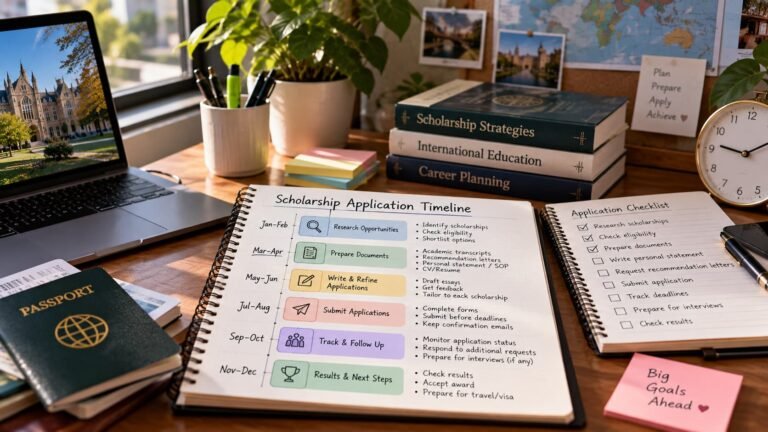

Planning to study in Australia from Nigeria starts with a course and an eligible education provider, then a Student visa (subclass 500) application. This guide explains the sequence and the official checks to make before you pay a fee or book travel. Requirements and charges can change; check the linked Australian Government pages again when you apply.
Choose a registered course and secure an offer
Compare the course, campus, tuition, entry requirements and support offered by the institution. Check that both the provider and course are registered for international students in the Australian Government’s CRICOS register. Apply through the institution’s official channel. Once you accept an offer and complete its enrolment steps, the provider issues a Confirmation of Enrolment (CoE). The CoE is needed for the visa application; an offer letter alone is not a substitute. Ask the provider when its application and enrolment deadlines fall, because they are separate from visa processing.
Check the subclass 500 requirements for your circumstances
Use the Department of Home Affairs’ Student visa page and its Document Checklist Tool. Enter your country of passport and education provider rather than relying on another applicant’s checklist. Depending on your case, evidence can cover identity, enrolment, English language ability, financial capacity, health and character. Most student visa applicants need Overseas Student Health Cover (OSHC) for their stay; check the exact exemption rules. The official checklist and online application identify the evidence required of you.
Explain your genuine study plans
The Genuine Student requirement asks why you chose the course and provider, how the study fits your background and future plans, and your circumstances. Answer in your own words and support relevant claims with authentic documents. Studying must be the primary reason for applying. Read the official Genuine Student guidance; no template or agent can guarantee a result.
Budget and lodge through the official portal
Plan for tuition, travel, accommodation, daily living and OSHC, as well as the current visa application charge. The financial evidence required by Home Affairs is not necessarily the same as your actual budget. Fees and financial thresholds change, so use the current Study Australia visa overview and Home Affairs checklist. Submit the application using the government’s step-by-step visa guidance, which points to ImmiAccount. Keep copies of every document and respond to any official request for health checks, biometrics or further information. Do not claim approval before a decision is issued.
After a decision
Read your visa grant notice and its individual conditions before arranging travel and work. Study and work permissions differ by situation, including research-degree exceptions. Your institution’s international student team can help with arrival, housing and orientation; immigration advice should come from an authorised professional where needed. If a third party helps you, verify their role and submit truthful information yourself.
Connect your next steps
Explore the Australia country hub for related opportunities and guidance. A listing is a discovery aid: check its institution’s official page for current eligibility and deadlines before applying. For university selection, compare the provider’s official admissions pages with CRICOS; Seglas will link verified university profiles here as they are completed.
Sources checked 23 September 2026: Department of Home Affairs, subclass 500; Document Checklist Tool; Genuine Student requirement; CRICOS; Study Australia application process. Recheck the official sources before submitting an application.