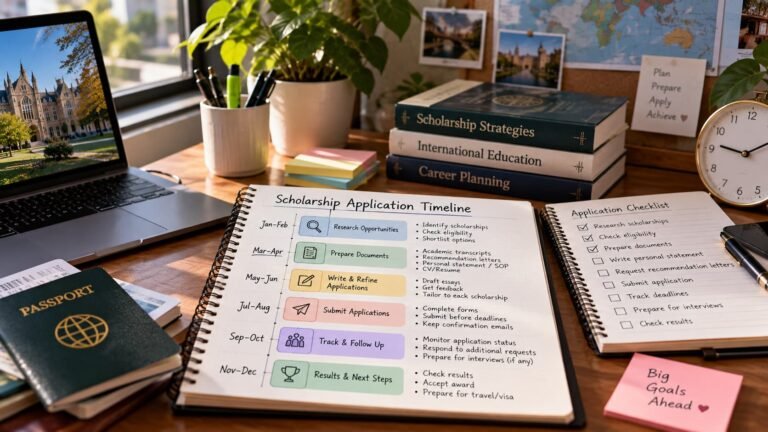

A scholarship application can fail because a document is missing, unreadable or sent through the wrong portal—even when the applicant meets the academic criteria. Prepare a reusable document folder, but treat the provider’s current checklist as the final authority. Not every award asks for every item below, and the university admission form may have separate requirements.
Start with the provider’s exact instructions
Record the award and entry year, deadline, accepted file types, size limits, naming rules and whether documents must be uploaded by you, sent by a referee or issued directly by an institution. Check whether originals, certified copies or translations are required. EducationUSA advises applicants to collect transcripts and recommendations well ahead of deadlines because requirements vary by institution.
Identity and academic records
You may need a passport or other permitted identity document, degree certificate, transcript, current enrolment letter or proof of expected graduation. Check whether the name matches across records and whether an official translation is needed. A screenshot of a student portal may not count as a certified transcript. Request records from the issuing institution early and confirm how the provider wants them delivered.
Evidence of language and other tests
If a programme requires English proficiency or another examination, note the exact accepted test, version, minimum component scores, validity and official score-reporting method. Some institutions allow a conditional application pending results; others do not. A prior degree taught in English can be accepted in some circumstances, but a medium-of-instruction letter is not a universal waiver. Verify the policy before paying for a test or relying on an exemption.
Written application materials
- CV or résumé: tailor it to the award and use accurate dates and roles.
- Statement or essays: answer the current prompt and respect word limits rather than recycling a generic draft.
- Research proposal or portfolio: include only when requested, in the specified format.
- Financial evidence: if a need-based award asks for it, check the accepted documents and handle sensitive data through the verified portal.
- Admission evidence: applicant ID, conditional offer or acceptance letter, depending on the scheme.
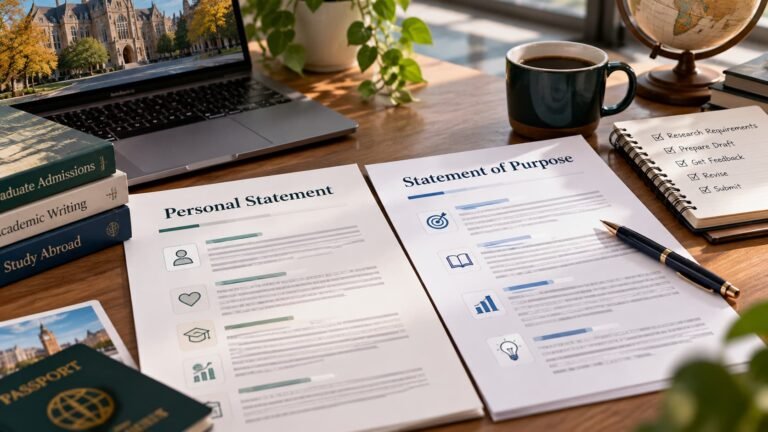
Different programmes use the terms “personal statement” and “statement of purpose” differently. Read each prompt and ensure your document does the job it asks for. Do not upload private financial records to a third-party form you cannot connect to the named funder.
References need their own timeline
Confirm who can recommend you and whether the provider emails referees a private link. Ask people who can discuss your work with examples, give them the criteria and deadline, and track receipt. Do not mark a reference complete merely because you entered a name. EducationUSA’s graduate application guidance emphasises detailed recommendations from people familiar with an applicant’s work.
Organise files so you submit the right version
Create a folder per award and a master folder for reusable records. Name files clearly with the document type and a date or version; avoid labels such as “final-final.” Keep your raw documents separate from application-ready copies. Before upload, open each PDF, check every page is legible and complete, and make sure no annotation or tracked change remains. Review whether the portal requests one combined file or separate uploads.
Do a final two-portal check
If admission and scholarship are separate, make a checklist for each. Confirm the programme and intake match, every mandatory field is complete, referees have submitted where required, and the correct essay is attached. Submit with a buffer before the official closing time and save the confirmation or application number. Reopen the portal if it permits you to confirm document status.
After submission
Watch for requests for originals, interviews or additional proof, and note response deadlines. A successful upload is not an award. Keep your document folder secure and update it for the next application. Use Seglas guides for related writing and planning, then follow the exact current rules for each opportunity.
A sample folder and quality check
For one award, keep a read-only copy of the current instructions, a checklist, the final essay, CV, transcript, translation if needed and submission receipt. Put draft versions in a separate folder so you do not upload an earlier essay by mistake. Before submitting, compare each filename with the portal label and open the file after export. A PDF can exist while containing a cut-off page or the wrong applicant name.
Ask a trusted reader to check clarity in the statement, but do not share passport or financial evidence casually. Redact sensitive data where a review does not require it. After submission, retain only what you need securely and follow the provider’s process for correcting an uploaded mistake rather than sending documents to an unverified email address.